Modern Paintings and Traditional Paintings – Choose the Right Art for Your Space in 2025
admin
September 17, 2025
Blogs
Modern Paintings and Traditional Paintings – Choose the Right Art for Your Space in 2025
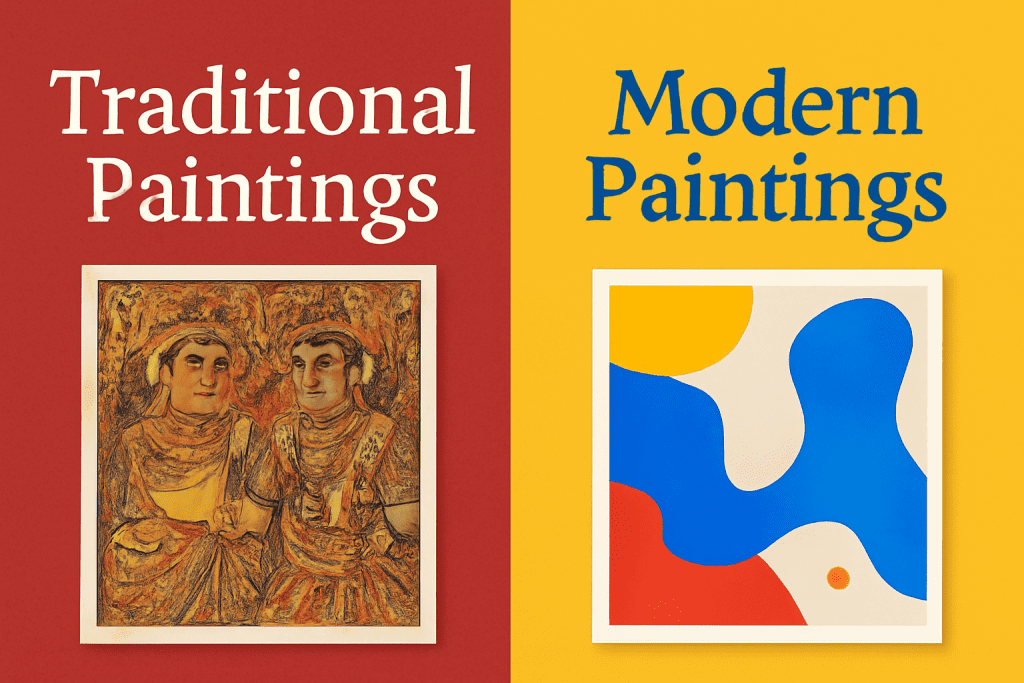
The age‑old debate between modern paintings and traditional paintings has been an engaging discussion in interior design and home decoration. The choice to have modern paintings or traditional paintings can make a huge difference in the feel, continuity, and mood of a room when selecting art that belongs in it. Making the right type of art isn’t solely based on its look—it can both make and destroy your room’s overall aesthetic and ambiance.
In this blog, we take Modern Paintings and Traditional Paintings deep, so you can see the differences, advantages, and ideal applications of each style. The theme word Modern Paintings and Traditional Paintings shows up again and again, subtly inserted in headings, paragraphs, and transitions. You’ll learn about the exciting elements of modern paintings, which provide courage and energy, and some of the rich culture, craftsmanship, and timeless warmth of historical paintings.
Whether you live in a minimalist modern apartment or a house with heritage details, this will help you identify the right art for your home. No matter the type of painting- abstract contemporary paintings, regional art using natural dyes and inspired by folk arts, we’ll cover it all definitions, comparisons, design challenges, sourcing, potential pitfalls, frequently asked questions, and even inspiration for mood-boards!
Bear in mind, while you continue to read, that Modern Paintings and Traditional Paintings are not competitors but choices. The aim is cohesion between your home’s décor theme and the work of art you select. Knowing traditional paintings in their entirety—Warli, Kalamkari, Pattachitra, and so on—makes informed decisions possible. Likewise, exploring modern paintings—from minimalism to Indian contemporary art—lets you bring bold statements and flexible design statements into your interiors.
Defining Modern Paintings
What counts as a modern painting? In this context, modern paintings include abstract art, minimalism, contemporary Indian modern art, expressive brushwork, and mixed media techniques. The category of modern paintings is broad:
Abstract paintings: forms, lines, and color are employed expressively instead of depictively.
Minimalist works: reduced compositions, negative space, subtle color contrasts – explore form.
Contemporary Indian modern paintings: artists such as Atul Dodiya, Anjolie Ela Menon (New work), Seema Kohli, Ram Kumar, and more all use Indian subject matter with a modern approach.
Mixed media: acrylic, resin, metallic finish, multiple textures, commonly found in expensive modern artwork.
Geometric, bold statement works: paintings that can generally be very large, that anchor a contemporary interior space.
Benefits of contemporary paintings:
Make a visual impact: Bright colors, bold contrasts, and large scale — perfect for attention-grabbing designs.
Versatile style fit: Modern paintings are perfect wall decorations for the living room, bedroom, kitchen, office, hotel, dining room, bar, and so on.
Modern energy: The classy, energetic mood goes perfectly with modern furniture and architecture.
Minimal maintenance: Most contemporary paintings—be they acrylic or prints—simply require dusting with a damp cloth.
Wider availability: There are galleries, online galleries, and print studios with modern paintings at varying price points—from prints that won’t break the bank, to originals available at the gallery.
When considering art, Modern Paintings and Traditional Paintings as phrases might suggest opposing poles—but here, we’re focusing on modern painting forms, how they differ from traditional painting styles, and how they can define your space with dynamic appeal.
Defining Traditional Paintings
Conversely, traditional paintings are Indian folk art, classical styles, and local history-based styles. For example, Kalamkari, Pattachitra, Madhubani, Warli, Tanjore, and Miniature paintings.
Styles that represent traditional paintings:
- Madhubani and Warli – Geometry and storytelling forms integrating cultural symbols that are folklore-based.
- Kalamkari: dye on silk or cotton for mythological or floral designs, legends or narratives, drawing pictures by hand.
- Pattachitra: Odisha-style scroll paintings characterized by colors, details, narratives from mythology, and shades of red, green, ochre, etc.
- Tanjore paintings: gold-plated forms based on figurative tradition, compositions, represented temple deities with ornate frames.
- Rajasthani Miniature or Mughal Miniature mode – beautifully painted with royal scenes, courtiers, poetry, flora, and fauna.
- Classical works by region – Survey work from Kerala mural paintings to the scroll traditions of folk work in Maharashtra, Bengal or Karnataka.
Advantages of Traditional Paintings:
- Cultural richness, narrative: Each painting tells a story – local mythology, motifs from heritage,-reminiscing lore – create storytelling on your walls.
- Handcrafted: Traditional paintings are produced by artisans using historical methods, natural pigments, organic colorant, good quality brushes or handcrafted paper.
- Timeless warmth: Earth colors, ornate designs, symbolic shapes – a cozy traditional space.
- Authenticity and provenance: Many traditional paintings include certificates or require stamps from regional art circles.
- Emotional connection: Traditional paintings provide an emotional link to ancestral heritage, family history, or cultural identity for many consumers.
- By combining Modern Paintings and Traditional Paintings (employed independently), the content clearly explains their specific characteristics, incorporating the primary and secondary keywords.
The Blended Approach: Modern Indian Fusion
One increasing trend in interior design is blending the best of both worlds—merging aspects of traditional paintings with contemporary visual sensibilities. Fusion pieces recognize the old while modifying it to minimalist or abstract forms. Fusion works permit cultural depth without compromising harmony with contemporary design.
What fusion works do:
- Blend traditional motifs—like folk patterns or mythological subjects—into sleek, minimalist compositions.
- Utilize modern-day color schemes (monochromatic, pastels) on traditional shapes.
- Employ modern media—acrylic, mixed media, digital rendering—while preserving hand‑drawing or artisanal textures.
- Enable flexible placement in varied décor schemes: minimalist homes, ethnic interiors, or transitional spaces.
Examples from Indian art:
- A Pattachitra‑style narrative rendered in monochrome black and white, abstracted into elegant vertical panels.
- Kalamkari floral motifs are simplified into minimalist line work on large canvases.
- Madhubani patterns used in collage form, layered over metallic backgrounds.
- Warli village scenes are printed digitally but overlaid with hand‑painted accents for texture.
- Contemporary painters weave temple architecture sketches into expressive watercolor fields.
This fusion approach leverages the best of both: the soul of traditional paintings and the fresh visual language of modern paintings.
Comparing Side‑by‑Side
This section presents a side-by-side comparison between the two styles across multiple criteria.
Criteria for comparison:
Aspect | Modern Paintings | Traditional Paintings |
Color Palette | Bold, high-contrast, contemporary | Earthy, intricate, culturally rooted |
Theme & Subject | Abstract, interpretive, expressive | Mythology, folklore, heritage scenes |
Materials & Texture | Acrylic, mixed media, metallic, canvas | Organic dyes, natural pigments, hand-crafted paper, or cloth |
Price & Availability | Prints are widely available; originals vary widely | Artisan originals are often niche, with limited availability |
Maintenance | Simple maintenance—dust or wipe | May require special care depending on pigments/materials |
Color Palette
Modern paintings are majorly built around strong saturated colors—strong blues, reds, and golds—providing powerful focal points. Classical paintings are more earthy and subdued with ochre, brown, red, forest green, and white, with much attention to detail.
Theme & Subject
Contemporary paintings allow viewers to interpret—shapes might evoke emotion, movement, or merely aesthetic balance. Traditional paintings generally present stories—deities, rural scenes, seasonal celebrations, or popular legend—replete with symbolism.
Materials & Texture
Contemporary pieces tend to play with overlaid textures, gloss finishes, metal inlays, or resin overlays. Historical Indian painting is based on texture from hand-applied natural pigments, cloth or canvas, and traditional techniques such as block printing or hand brushing.
Price & Availability
Modern galleries have made it simple to locate a contemporary painting—numerous prints, posters, and originals at reasonable prices. Classic masterworks tend to be more costly—workmanship is time-consuming, materials are expensive, and work could be one of a kind or limited.
Maintenance
Modern art—acrylic or print—is easy to care for: just dust or wipe gently. Classic works could call for preservation: excluding direct sunlight (preserving organic pigments), periodic dry cleaning, or controlled humidity.
This chart and analysis show how each style of art will add to your décor in varying ways.
Which One Works for Your Space?
Knowing your interior style makes it easier for you to select between modern paintings and traditional paintings—or even mix them.
Minimalist or Contemporary Homes → Modern Paintings
Rooms with streamlined furniture, clean lines, beige tones, and minimalist décor crave the graphic strength of contemporary paintings. Consider big abstract canvases over a minimal sofa, geometric works as bedside headboards, or black‑and‑white emotive art on corridors. Contemporary paintings can introduce splashes of color or tonal contrast to neutralized rooms.
Heritage-Inspired or Ethnic Decor → Traditional Art Pieces
Spaces with carved wood furniture, ethnic rugs, brass accessories, or antique rugs are enhanced by the coziness of conventional paintings. Tanjore or Kalamkari artwork hung above low teak cupboards, or a Madhubani framed work over an ethnic sitting area, adds cultural richness. Traditional paintings enrich the narrative of ethnic décor, and feel at home with textile prints or handloom aesthetics.
Transitional Interiors → Fusion Works or Combining Either Style
For eclectic or transitional interiors—combining modern sofas with vintage rugs—fusion art is ideal. A modern minimalist canvas with tribal motifs, or a traditional‑inspired painting executed in a contemporary palette, bridges both styles. Alternatively, designate zones: modern paintings in the living room, traditional paintings in a reading nook or entryway.
Visuals or Moodboard Ideas
Modern minimalist living: walls painted white or pale gray; large canvas (4 × 6 ft abstract) in bold blue and gold; modern light fixtures; concrete or glass accessories.
Ethnic lounge: earthy walls—mustard or maroon; frames with carved wood; traditional painting centered above carved sideboard; brass lamp and tribal rug complement.
Transitional family room: neutral taupe walls; a fusion triptych featuring folk patterns in pastel blocks; modern sectional sofa; traditional cushions; potted plants for warmth.
By matching art to spatial style and décor mood, you ensure harmony without sacrificing personality.
Tips to Decide
Here are practical tips to help you decide between modern paintings and traditional paintings—or select both wisely.
Evaluate Room Theme, Palette & Furniture Style
First, reflect on your interior: is it more modern or traditional? If furniture is sleek (think leather, glass, steel), modern paintings are likely a better fit. If décor includes carved wood, ethnic fabrics, or warm tones, traditional paintings may suit better. Consider color matching or contrast—traditional paintings often complement deep wood tones.
Size & Placement
best behind beds, sofas, or feature walls. They may be oversized without being overwhelming because of the simple style. Classic paintings suit well in alcoves, corridors, or as a gallery wall piece. When using small classic paintings, unify the frame style or subject matter to prevent visual confusion.
Budget Considerations
Present-day prints and canvases vary from affordable to expensive commissioned originals. Original traditional paintings—particularly genuine folk or miniatures—can also cost more because they require artisanal labor. Another choice for you is finding good reproductions of classic paintings if budget is not an option.
Select an artwork that resonates with you. Do you resonate with modern abstraction or minimalism—or does a Kalamkari scroll touch your heart? Emotional connection enhances impact. Traditional wall art is selected by many to trigger nostalgia, heritage, or spirituality; others opt for modern styles to convey individuality and modern expression.
Lighting & Framing
Good lighting makes art. Old paintings are enhanced by soft halogen or warm LED accent lighting, highlighting texture and depth. New paintings are highlighted with directional cool light or track lights to highlight reflective properties. Frames can make or break: carved, gilded frames are appropriate for traditional, while minimalist or floating frames are appropriate for modern.
Using these guidelines helps determine the ideal painting for your décor, modern, traditional, or both.
Where to Obtain Quality Pieces
Finding high-quality art is important—whether you are looking for modern paintings, traditional or fusion.
Local Artisans & Galleries
Visit artisan fairs, artisan markets and local art galleries. In big cities like Kolkata, Jaipur, Mumbai, or Delhi, such galleries and other buildings are there where traditional and modern paintings are available. You might stumble upon contemporary work full of paint on sale at the Creativity Art Gallery or regional craft centres alongside Pattachitra, Kalamkari, and Madhubani works. Seeing them in person allows you to estimate scale, sense brushstrokes, inspect texture, and meet artists.
Online Collections
Several reliable online sites deal in Indian paintings. These websites permit filtering by style—modern art, folk art, or traditional painting categories. Close-up images can be seen, artist bios can be read, and authenticity certificates can be checked. In searching, filters like “traditional painting” or “modern canvas” can be used to see options side-by-side. Many sites deliver framed originals or fine art prints, complete with installation instructions.
Encourage Visiting Both
It is better to combine what you’ve learned online with real-world visits. You might find online a modern painting print that looks classy, but you’d have to see the actual modern acrylic painting to experience the texture and sheen that doesn’t show up digitally. Similarly, traditional paintings—especially on handmade paper or cloth—feel different live. Visiting galleries helps calibrate your taste and expectations before ordering online.
Quality Checklist
Artist credentials: local artisan collectives, signature or regional association.
Material specifics: acrylic vs. natural pigment; canvas vs. cloth.
Finishing & framing: ready to hang, UV varnish, mounting.
Authenticity documentation: certificates, artist statements, and galleries’ provenance.
Return or refund policy: especially important online.
This method guarantees that you wind up with art of your stylistic preference—modern paintings or traditional paintings—along with a quality and value guarantee.
Common Mistakes & How to Avoid Them
Even well-intended décor can fall into some traps when mixing or selecting art.
Mismatched Themes in One Room
One frequent error: placing a minimalist modern canvas in a heavily ornate ethnic room, or hanging a heavy folk‑painted work in a stark, modern space. The result feels disjointed. Either stick with one style per room or thoughtfully layer with fusion pieces or neutral zones where different styles complement rather than compete.
Neglecting Lighting & Frames
Another common oversight: ignoring how lighting and frames impact perception. Without proper lighting, subtle contrast in modern paintings may appear dull; traditional paintings may lose vibrancy in dim or incorrect light. And a mismatched frame can visually clash. Choose a frame style with the artwork’s aesthetic and room décor in mind.
Choosing Too Many Small Artworks Instead of a Cohesive Look
Gallery walls can be effective—but overcrowding with small artworks of varied style (mixing modern prints and traditional tribal art) often looks messy. The fix: choose a consistent palette, subject matter, or frame style—or opt for a single large statement piece for visual cohesion.
Overlooking Wall Color Compatibility
Your wall color can make or break an art choice. Modern paintings often look best against light or neutral backdrops, enabling colors to pop. Traditional paintings can enhance warm walls—deep red, mustard, olive. Mismatched background colors can dull the impact.
Skipping Personal Taste Filters
Finally, most consumers are influenced by trends and not by taste. You may adore contemporary canvas paintings—but find yourself emotionally connected to an old folk painting. Selecting a work strictly based on trend might have your space feeling unaligned with your essence. Always choose pieces that resonate with you.
Conclusion
Therefore, in the long debate about modern paintings and traditional paintings (or simply, Modern Paintings and Traditional Paintings), there is no best. It’s just what will work in your space, your style, and your soul.
Modern paintings bring clean visuals, contemporary energy, versatility, and easy upkeep. Classic paintings add depth, skill, cultural history, and ageless attraction. As you consider your décor—applied to themes, color schemes, furniture, dimensions, and emotional taste—the best choice becomes more evident. Placing styles in separate areas of the home—or featuring one style as a primary theme while highlighting the other—achieves layered interest without conflict.
Apply our recommended decision process: think about your room’s theme, palette, furniture style, size, placement, budget, lighting, and personal connection. These will lead you to style options—ranging from striking contemporary canvases to heartfelt classic pieces.
Ready to upgrade your décor?
Browse our handpicked range of modern paintings and gallery-gathered classic paintings to discover the ideal piece that resonates with your style and brings depth to your interiors.
Frequently Asked Questions (FAQs)
Yes—with proper planning. Employ a cohesive palette or theme, or position styles in various zones. Fusion paintings also enable bridging styles in an integrated manner.
Indeed. You can source good-quality prints or reproductions of classic paintings at affordable prices. Originals from craftsman collectives are more expensive but provide genuineness and investment potential.
Modern pieces (acrylic, print) usually just require light dusting with a cloth dampened in water. Traditional paintings—especially those on cloth or made with natural pigments—need to be shielded from direct sunlight, professionally dry cleaned from time to time or preserved under specific humidity conditions.
For modern pieces, large canvases work wonderfully above sofas or beds. Traditional pieces—especially intricate works—work well medium‑sized in alcoves or groupings. Always maintain scale harmony with furniture and wall space.
Check out craft fairs in Kolkata, Jaipur, Madurai, or go to artisan markets in Mumbai and Delhi. Find galleries that feature regional art forms, such as Creativity Art Gallery.

6, Ground Floor, Main Road Hauz Khas Village, New Delhi, 110016
- +91-9811406262
- info@creativityartgallery.org